

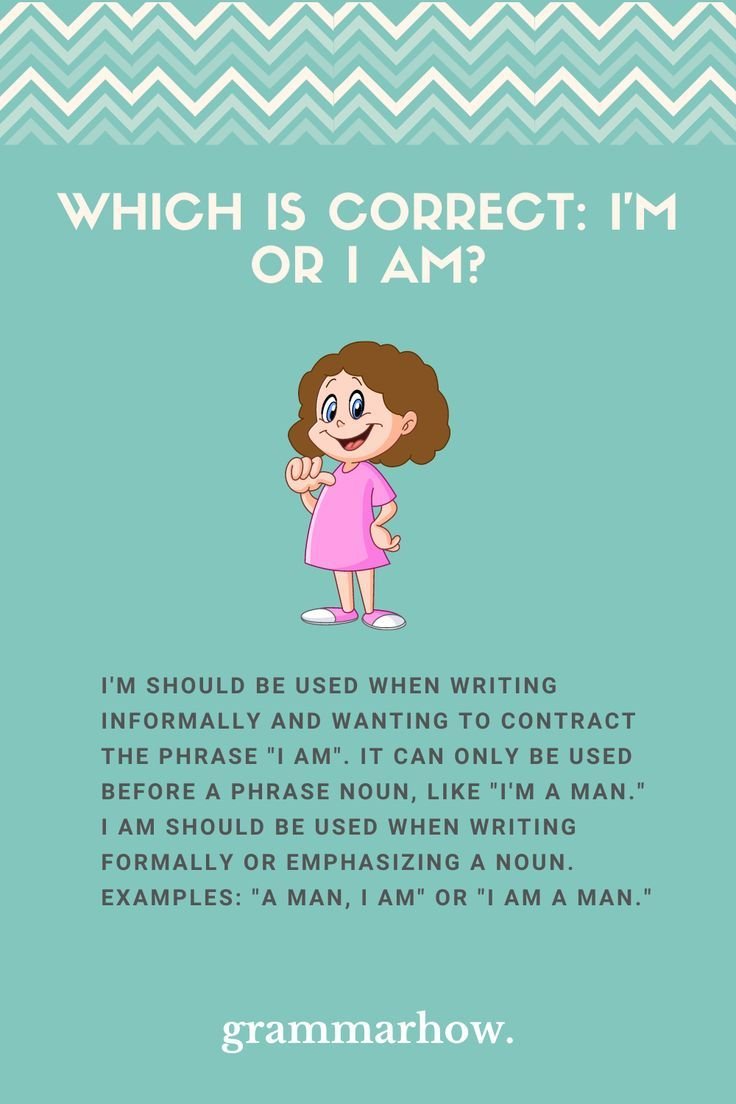
“I’m” and “am” may seem interchangeable, but there’s a crucial distinction. “I’m” is a contraction of “I am,” commonly used in everyday conversation. On the other hand, “am” is the simple present form of the verb “to be.” The key lies in understanding when to use each term correctly. Let’s delve deeper into the difference between “I’m” and “am” to ensure clear communication and accurate grammar.

The Difference Between ‘I’m’ and ‘Am’
Welcome to our detailed discussion on the difference between ‘I’m’ and ‘am’! Both of these words are commonly used in the English language, but they have distinct roles and meanings. In this article, we will delve into the nuances of these two words to help you understand when and how to use them correctly.
Understanding ‘I’m’
Let’s start with ‘I’m.’ This is a contraction, which means it is formed by combining two words together. In the case of ‘I’m,’ it is short for ‘I am.’ When you say “I’m,” you are essentially saying “I am” in a more casual or informal way. This contraction is commonly used in everyday conversations to express thoughts, feelings, or actions.
Examples of ‘I’m’
1. I’m going to the park with my friends.
2. I’m feeling happy today.
3. I’m excited about the upcoming school trip.
Understanding ‘Am’
Now, let’s focus on ‘am.’ Unlike ‘I’m,’ ‘am’ is a standalone word, and it is the first-person singular form of the verb ‘to be.’ This means that ‘am’ is used when you want to indicate that you are currently in a particular state or performing an action.
Examples of ‘Am’
1. I am a student.
2. I am eating lunch.
3. I am tired after a long day.
Key Differences Between ‘I’m’ and ‘Am’
Now that we have a basic understanding of ‘I’m’ and ‘am,’ let’s explore some key differences between the two:
1. Contraction vs. Standalone
One of the primary differences between ‘I’m’ and ‘am’ is that ‘I’m’ is a contraction, while ‘am’ is a standalone word. The use of contractions like ‘I’m’ is common in informal speech and writing, whereas ‘am’ is used in more formal contexts.
2. Informal vs. Formal
As mentioned earlier, ‘I’m’ is considered more informal compared to ‘am.’ You would typically use ‘I’m’ when talking to friends, family, or in casual settings. On the other hand, ‘am’ is used in formal writing, professional settings, or when you want to convey a sense of formality.
3. Clarity and Emphasis
Using ‘am’ can provide more clarity and emphasis in a sentence compared to ‘I’m.’ When you use ‘am,’ you are explicitly stating the action or state you are in without any contraction, which can add weight to your statement.
Best Practices for Using ‘I’m’ and ‘Am’
Now that you know the key differences between ‘I’m’ and ‘am,’ let’s go over some best practices for using these words effectively:
1. Use ‘I’m’ in Informal Settings
When you are chatting with friends or family, it’s perfectly fine to use ‘I’m’ to convey your thoughts or feelings. The casual nature of ‘I’m’ fits well in informal conversations.
2. Use ‘Am’ in Formal Writing
When writing essays, reports, or any formal document, opt for ‘am’ instead of ‘I’m’ to maintain a sense of professionalism and clarity in your writing.
3. Be Mindful of Context
Consider the context in which you are using ‘I’m’ or ‘am.’ Think about the tone you want to convey and choose the appropriate word accordingly. Adapting your language to different situations shows your command of the English language.
In conclusion, the difference between ‘I’m’ and ‘am’ lies in their formality, usage, and clarity. Remember that ‘I’m’ is a contraction that is commonly used in informal speech, while ‘am’ is a standalone word that is more suited for formal contexts. By understanding when and how to use these words appropriately, you can enhance your communication skills and express yourself more effectively in English.
Difference between "I'm" and "Am". Can they be used interchangeably?🤔
Frequently Asked Questions
What is the difference between “I’m” and “am”?
“I’m” is a contraction of “I am.” It combines the subject pronoun ‘I’ with the verb ‘am.’ On the other hand, ‘am’ is the present tense form of the verb ‘to be’ when used with the pronoun ‘I.’ In essence, “I’m” is a more casual or conversational way of saying “I am.”
When should I use “I’m” instead of “am”?
Use “I’m” in casual conversations, writing, or informal settings. This contraction is commonly used in spoken English and informal writing to sound more natural and less formal. On the other hand, “am” is more suitable for formal writing or when you want to emphasize the verb in a sentence.
Is there a difference in meaning between “I’m” and “am”?
There is no difference in meaning between “I’m” and “am.” Both forms are used to represent the subject pronoun ‘I’ with the verb ‘to be’ in its present tense form. The choice between using “I’m” or “I am” depends on the context and level of formality you want to achieve in your communication.
Can “I’m” be used interchangeably with “am” in all situations?
While “I’m” and “am” serve the same grammatical purpose, they are not always interchangeable. “I’m” is more commonly used in spoken English and informal writing, whereas “am” is better suited for formal situations or when you want to emphasize clarity and formality in your communication.
How can I remember when to use “I’m” or “am” correctly?
A helpful tip is to consider the tone and context of your communication. If you are writing formally or want to convey a professional tone, it is better to use “am.” In casual conversations or informal writing, opt for “I’m” to sound more natural and relaxed. Practicing by using both forms in different contexts can further help you remember when to use each correctly.
Final Thoughts
In conclusion, the difference between “I’m” and “am” lies in their contraction and emphasis. “I’m” is the contraction of “I am,” used informally in casual speech. Meanwhile, “am” is the simple present form of the verb “to be.” Understanding when to use “I’m” versus “am” can improve clarity and effectiveness in communication. Remember, choose “I’m” for contractions and informality, while “am” is used for the simple present tense of the verb “to be.” Mastering this distinction will enhance your writing and speaking skills.